Code: 5060
Dimensions:
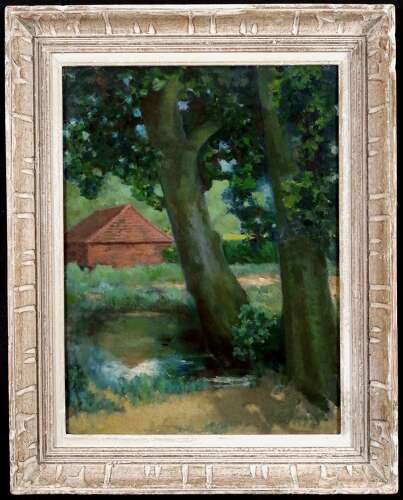
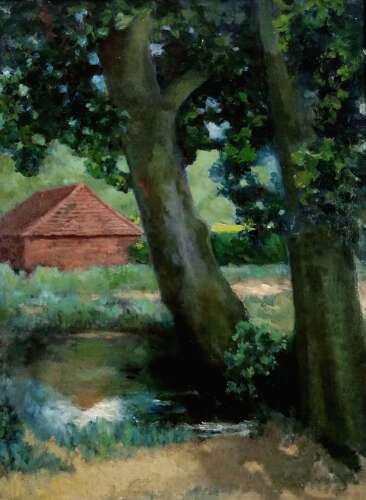
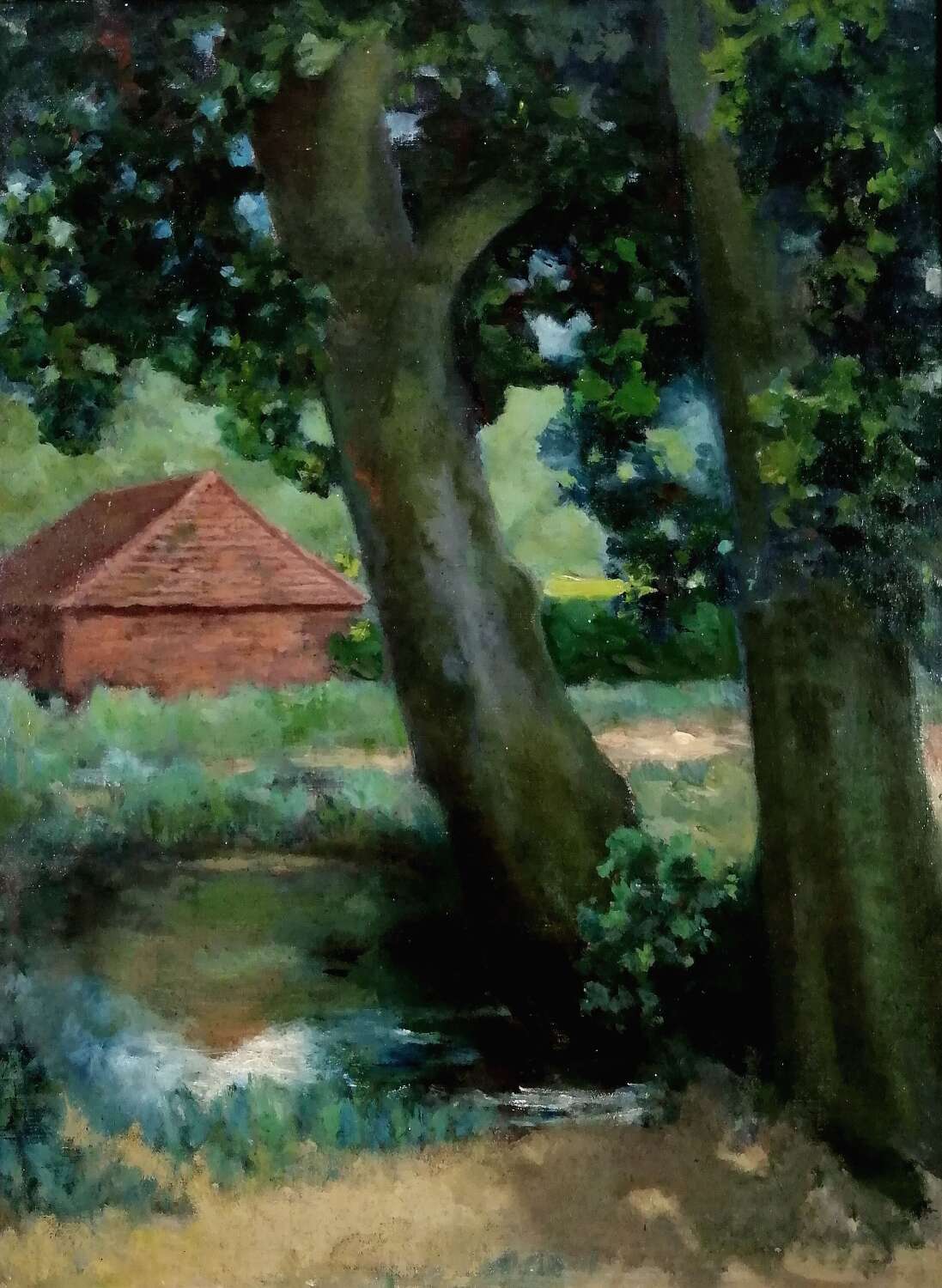
A beautiful large late 19th or early 20th century impressionist oil on canvas depicting a wooded landscape with pond and outbuilding, by Theodore Casimir Roussel.
Roussel was one of the leading early British Impressionists, along with Sickert, Maitland and Wilson Steer.
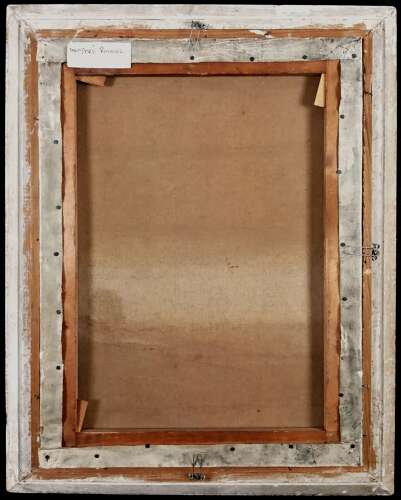
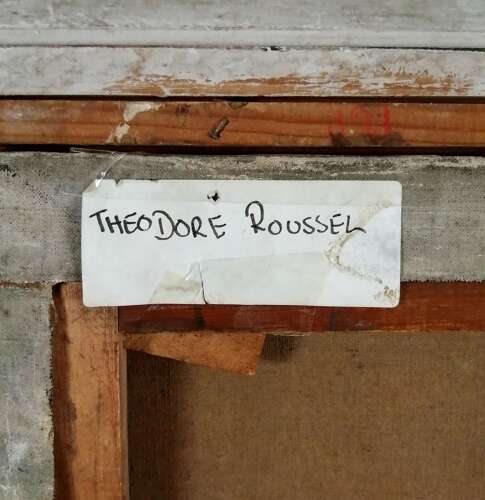
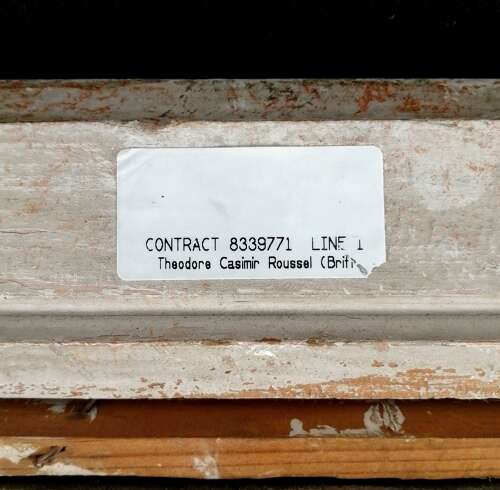
The work is in very good original condition and presented in a painted carved wood Montparnasse frame. Old labels on the reverse.
Artist: Theodore Casimir Roussel (British/French, 1847-1926)
Title: Wooded Landscape
Medium: Oil on canvas
Size: 29 x 23 inches (73.5 x 58.5 cm) including the frame
Born in Lorient in Brittany, Frenchman Theodore Roussel came to England in 1874 after serving in the Franco-Prussian War, he settled in London permanently following his marriage to an English woman. He was to become a leading light in the British Impressionist movement.
By the mid-1880’s Roussel had entered Whistler’s entourage (Whistler and he were neighbours in Chelsea) and, whilst largely self-taught, he began to acquire a strong reputation, particularly with works such as The Reading Girl, which was shown at the New English Art Club in 1887.
At this time Roussel was one of the radical band of Whistler’s followers at the Society of British Artists. The latter’s attempts to reform the society of which he had taken up Presidency in 1886 were poorly received and, when the conservative members staged a coup in 1888, Roussel was ousted along with his master.
Theodore Roussel, Paul Maitland, Frederick Brown, and Philip Wilson Steer - as well as Walter Sickert - collectively went on to form the London Impressionists, exhibiting under that name at the Goupil galleries.
Roussel’s closeness to Sickert led to his selection for the London Impressionists exhibition in 1889, at which the resplendent Blue Thames, End of a Summer Afternoon, Chelsea was a centrepiece.
With this wider recognition Roussel began to emerge from the shadow of his former mentor and arrive at a technique which was distinctly individual and characteristic – both in terms of his meditative and harmoniously tonal larger paintings and intimate smaller works that encapsulated a painterly French Anglo-American cosmopolitanism. However, disliking Sickert and disillusioned with the changing complexion of the NEAC, Roussel broke away in the early 1890s.
Roussel was now well established as a portraitist and etcher of the London scene. Based at Bellifield House in Parsons Green, a fashionable quarter near Chelsea and his beloved River Thames, he worked comfortably in his studio by day for almost 20 years ‘as his own man’ while spending most evenings at his favourite haunt, the Savage Club, just off the Strand.